


Texas Electricity Has Entered A Different Era
For much of the past decade, commercial electricity procurement was largely a pricing exercise.
Businesses gathered supplier quotes, compared contract terms, and selected the offer that best matched their objectives.
That approach worked in a market where electricity supply consistently outpaced demand and pricing remained relatively stable.
Today, the economics of Texas electricity are changing.
Population growth, industrial expansion, electrification, and unprecedented demand from data centers are increasing pressure on the ERCOT grid. As electricity demand rises, businesses are entering a market with different supply dynamics, greater uncertainty, and a higher cost of getting procurement decisions wrong.
The objective hasn’t changed, businesses still want reliable electricity at competitive prices.
The environment they’re buying into inevitably has.
Texas Is Leading The Nation In Electricity Demand Growth
The numbers help explain why.
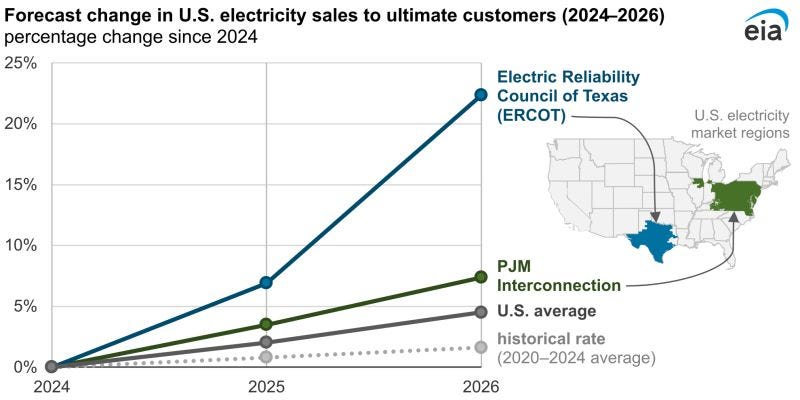
According to the U.S. Energy Information Administration, ERCOT is expected to experience the fastest growth in electricity demand of any major U.S. power market through 2026.
Unlike many regional grids experiencing modest increases, ERCOT is being reshaped by multiple structural forces at once:
Population growth
Large-scale industrial investment
AI and data center development
Manufacturing expansion
Transportation electrification
Each new megawatt of demand increases competition for generation resources and places greater importance on how electricity is produced, delivered, and ultimately purchased.
Demand growth alone doesn’t guarantee higher electricity prices.
It does, however, create a market where procurement decisions deserve more attention than they did just a few years ago.
Wholesale Electricity Prices Are Trending Higher
Growing demand is only one side of the story.
The other is how the market has responded.
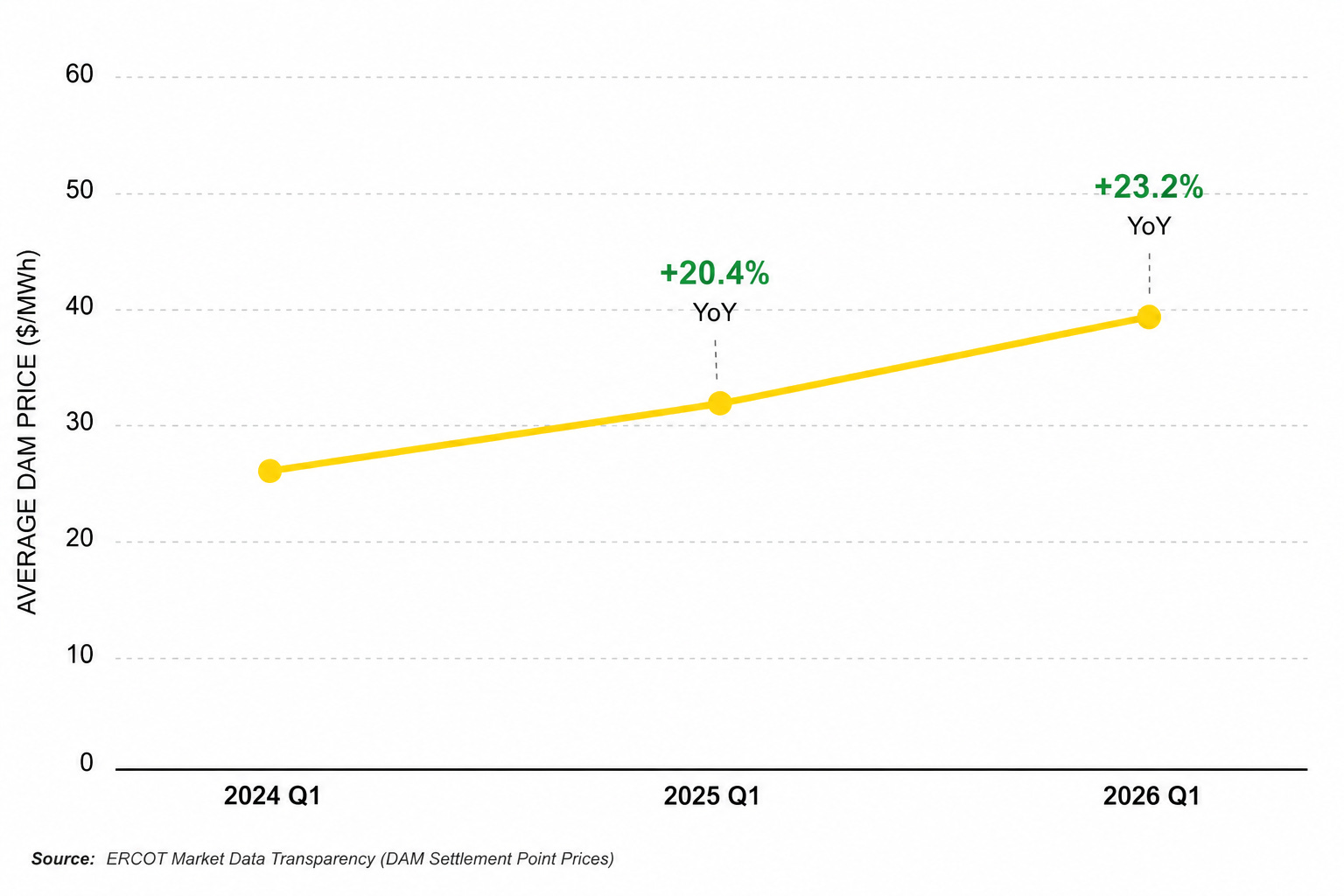
Looking at ERCOT’s Day-Ahead Market (DAM), average first-quarter wholesale electricity prices have increased for two consecutive years. Compared to Q1 2024, average prices were approximately 20.4% higher in Q1 2025 and 23.2% higher again in Q1 2026.
While wholesale markets will always fluctuate from season to season, the broader trend is difficult to ignore: businesses are operating in a market that has become materially more expensive than it was only a few years ago.
For commercial electricity buyers, this changes the economics of procurement.
When wholesale prices were consistently lower, procurement often focused on finding the cheapest supplier.
As wholesale costs increase, even relatively small differences in contract pricing can translate into significant changes in annual operating expenses, particularly for facilities with large or continuous electricity demand like food processors, petrochemical manufactures, cold storage facilities, etc.
The market hasn’t simply become more volatile.
It has become more valuable to understand how your business is being priced.
A Higher-Cost Market Raises the Value of Better Procurement
Higher wholesale prices don’t necessarily mean every business will pay more for electricity.
Commercial electricity contracts are influenced by many factors, including market timing, contract structure, supplier competition, and the characteristics of a facility’s electricity usage.
What the data does suggest is that procurement decisions now carry greater financial consequences than they once did.
When electricity represented a smaller operating expense, inefficiencies in procurement were easier to absorb.
As prices rise, we see those same inefficiencies become increasingly expensive.
The question is no longer simply:
“What electricity rate can we get?”
It’s becoming:
“How competitive is our purchasing position in today’s market?”
The Forward Market Is Telling a Similar Story
Wholesale electricity isn’t only traded for today.
Every day, market participants also buy and sell electricity for future delivery. These forward prices reflect current expectations about where the market may be headed over the coming years.
While forward markets constantly evolve as new information becomes available, they offer valuable insight into how today’s market is pricing tomorrow’s electricity.
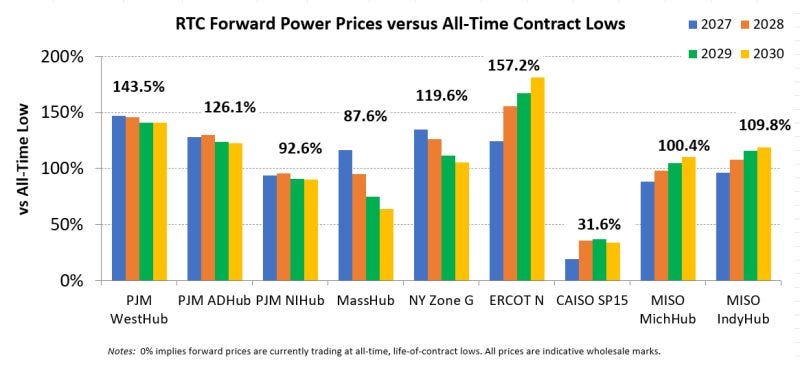
Current forward prices for both the Houston Hub and North Hub continue to reflect a market that expects power to remain materially more expensive than the conditions many businesses became accustomed to just a few years ago.
That doesn’t mean prices can’t fall.
It does mean businesses should recognize they’re entering procurement discussions in a different market environment than they were only a few contract cycles ago.
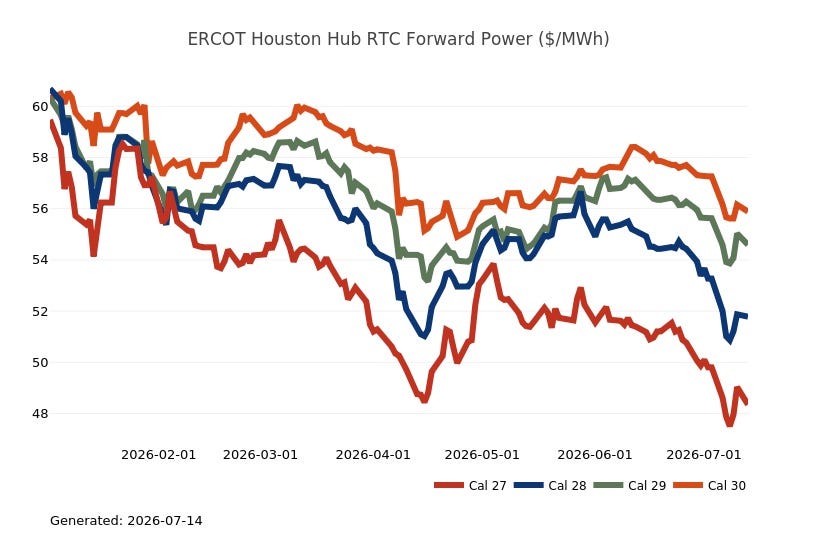
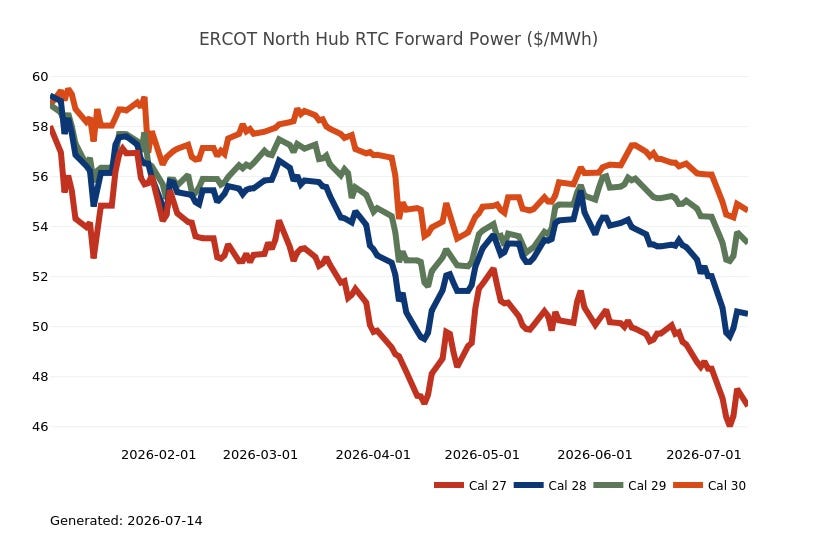
(note: at the time of writing this current forward strips are at lows, signaling a good opportunity to lock in new commercial electricity rates and contract structures.)
Procurement Should Adapt to the Market You’re Buying In
Every electricity contract is negotiated within the context of current market conditions.
Businesses can’t control wholesale electricity prices, but they can control how they approach procurement.
That’s becoming increasingly important as electricity represents a larger share of operating costs across manufacturing, data centers, healthcare, commercial real estate, and other energy-intensive industries.
The objective isn’t to predict where electricity prices will go next.
It’s to understand today’s market well enough to make better purchasing decisions within it.
Because procurement isn’t just about buying electricity.
It’s about buying electricity well.
So, If wholesale prices are changing.…and market conditions are changing...
Then procurement should probably change as well.
That raises a more important question:
What does effective electricity procurement actually look like in today’s market?
Procurement, A Story Of Change
For many businesses, electricity procurement has traditionally followed a familiar process.
A contract approaches renewal.
Suppliers are invited to submit pricing.
Quotes are compared.
A decision is made.
While that approach may still produce competitive offers, it often begins after the most important question has already been overlooked:
How does the market actually value our business?
Every commercial electricity supplier evaluates historical usage before preparing a proposal.
They’re not simply calculating annual electricity consumption.
They’re assessing the characteristics of your facility that influence pricing, including how and when your business consumes electricity, how consistent operations are throughout the year, and the level of risk associated with serving your load.
Those characteristics help determine how your business is priced before the first quote is ever submitted.
The procurement process hasn’t become more complicated.
It’s become more data-driven.
Visibility Creates Purchasing Power
The most informed buyers don’t begin by requesting quotes.
They begin by understanding their position.
Questions such as:
How competitive is our current electricity contract?
How does our facility compare to similar electricity users?
What characteristics of our load influence supplier pricing?
Does today’s market support going out for procurement?
Where does our greatest purchasing leverage exist?
These questions are difficult to answer from a monthly electricity bill alone.
They require context.
Because procurement isn’t simply about buying electricity.
It’s about understanding the market you’re buying from—and how that market evaluates your business.
How To Win
Better procurement doesn’t begin with supplier quotes.
It begins with understanding your purchasing position.
Rather than starting with price comparisons, work backward from the characteristics that suppliers use to evaluate commercial electricity buyers.
By understanding those characteristics first, businesses can enter procurement with greater visibility into how the market is likely to price their electricity demand.
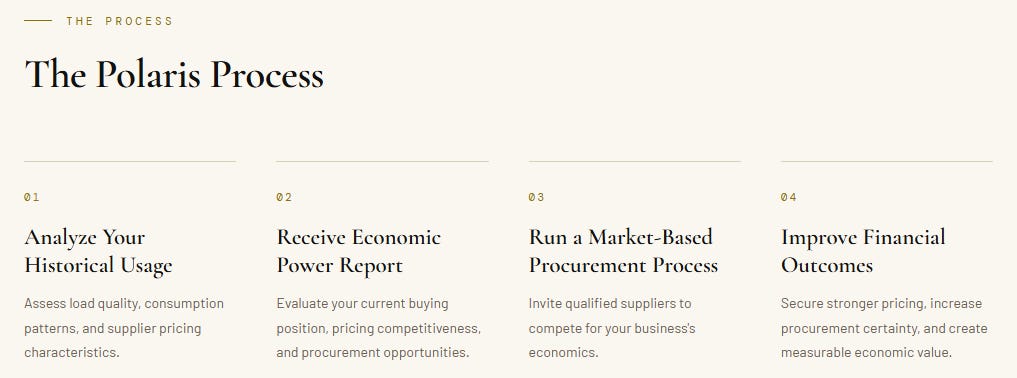
01 Analyze Your Historical Usage
Evaluate the same interval electricity data suppliers use during procurement, identifying the characteristics that influence pricing.
02 Create An Economic Report
Benchmark your current purchasing position, identify pricing strengths and weaknesses, and uncover procurement opportunities before entering the market.
03 Run a Competitive Procurement Process
When appropriate, invite suppliers to compete for your business using current market conditions and your facility’s purchasing profile.
04 Improve Financial Outcomes
Better visibility leads to more informed procurement decisions, stronger purchasing power, and improved financial outcomes over the life of an electricity contract.
Skip the manual work and let Polaris run the process for you - no risk.
Better procurement doesn't begin with better prices. It begins with a better understanding of your purchasing position.
Dive Into Your Next Lesson Below.


