

What is the average commercial electricity rate in Texas?
It’s one of the most searched questions by businesses questioned by the market and it’s an understandable place to start.
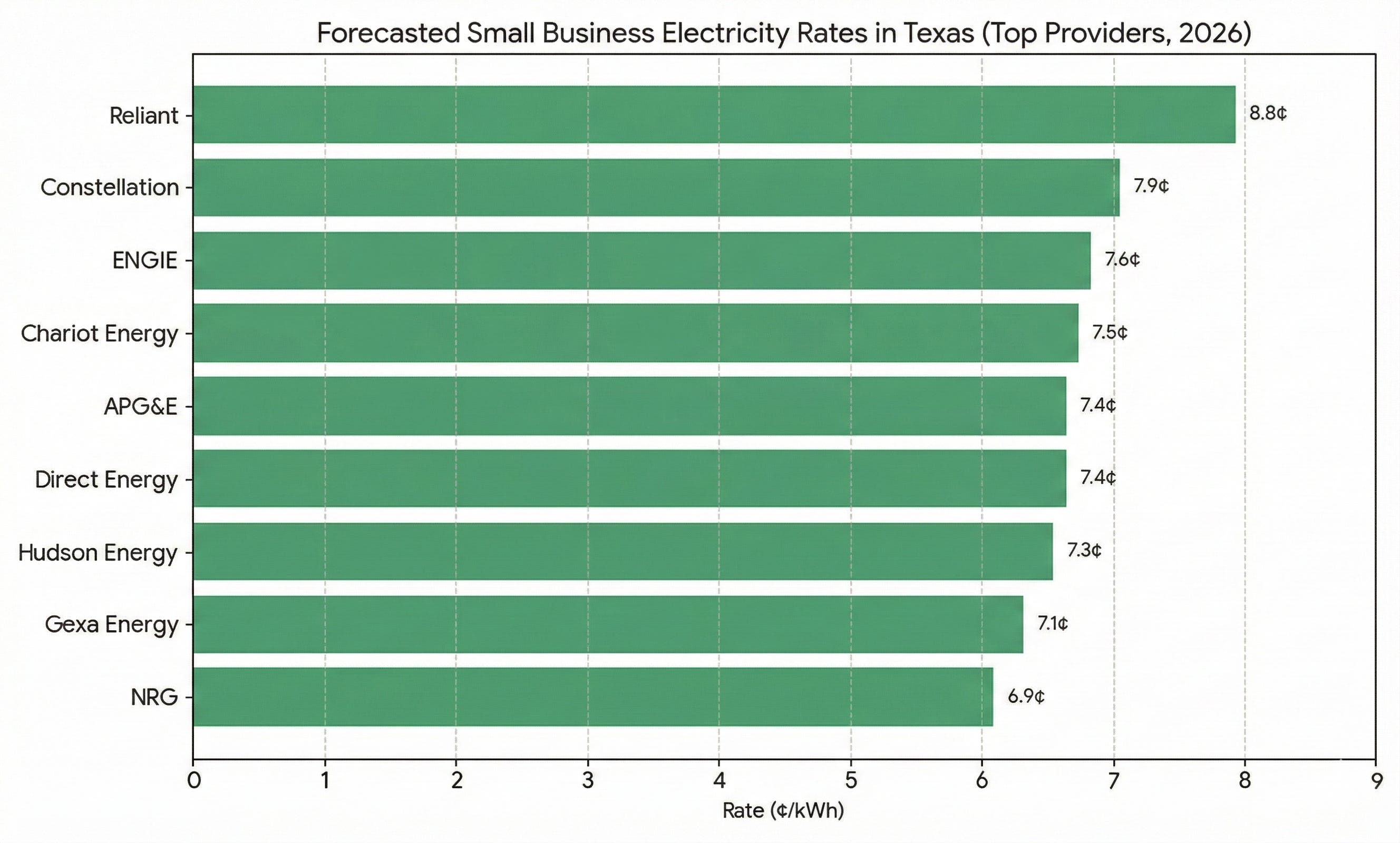
Published benchmarks often place commercial electricity somewhere between 7 and 9 cents per kilowatt-hour, depending on supplier, contract structure, business size, and market conditions.
Those figures provide a useful snapshot of the market, particularly for smaller commercial customers comparing publicly available offers.
For larger commercial and industrial facilities, however, the conversation changes.
The number on a supplier’s proposal isn’t pulled from a pricing sheet. It’s the result of an underwriting process that evaluates how your facility is expected to interact with the Texas electricity market over the life of the contract.
We’ve seen facilities with similar annual energy consumption receive meaningfully different pricing, not because the market changed overnight, but because suppliers viewed the underlying risk differently.
Likewise, Polaris has facilitated transactions for qualifying commercial loads in roughly the 4.5–6.5¢/kWh range, due to competitive procurement and a deeper understanding of facility-specific risk can materially influence outcomes.
The question, then, isn’t whether one published rate is “right” and another is “wrong.”
It’s understanding why two facilities can receive entirely different prices for what appears to be the same product.
That answer begins long before a supplier ever produces a rate.
Suppliers Don't Price Electricity. They Price Risk.
When a supplier receives a request to quote your facility, they don’t begin by asking, “What rate should we offer?”
They begin by asking, “What are we being asked to serve?”
Behind every commercial electricity proposal is roughly 24 months of interval data, typically measured every 15 minutes. That history allows suppliers to build a forward-looking risk profile of your facility, much like a lender evaluates credit history before issuing a loan or an insurer assesses risk before setting a premium.
Annual consumption is only one piece of that picture though.
Suppliers also evaluate how consistently your facility consumes electricity, how much demand it places on the grid during peak periods, how consumption changes across seasons, and whether that load aligns with hours that are expected to be more expensive to serve.
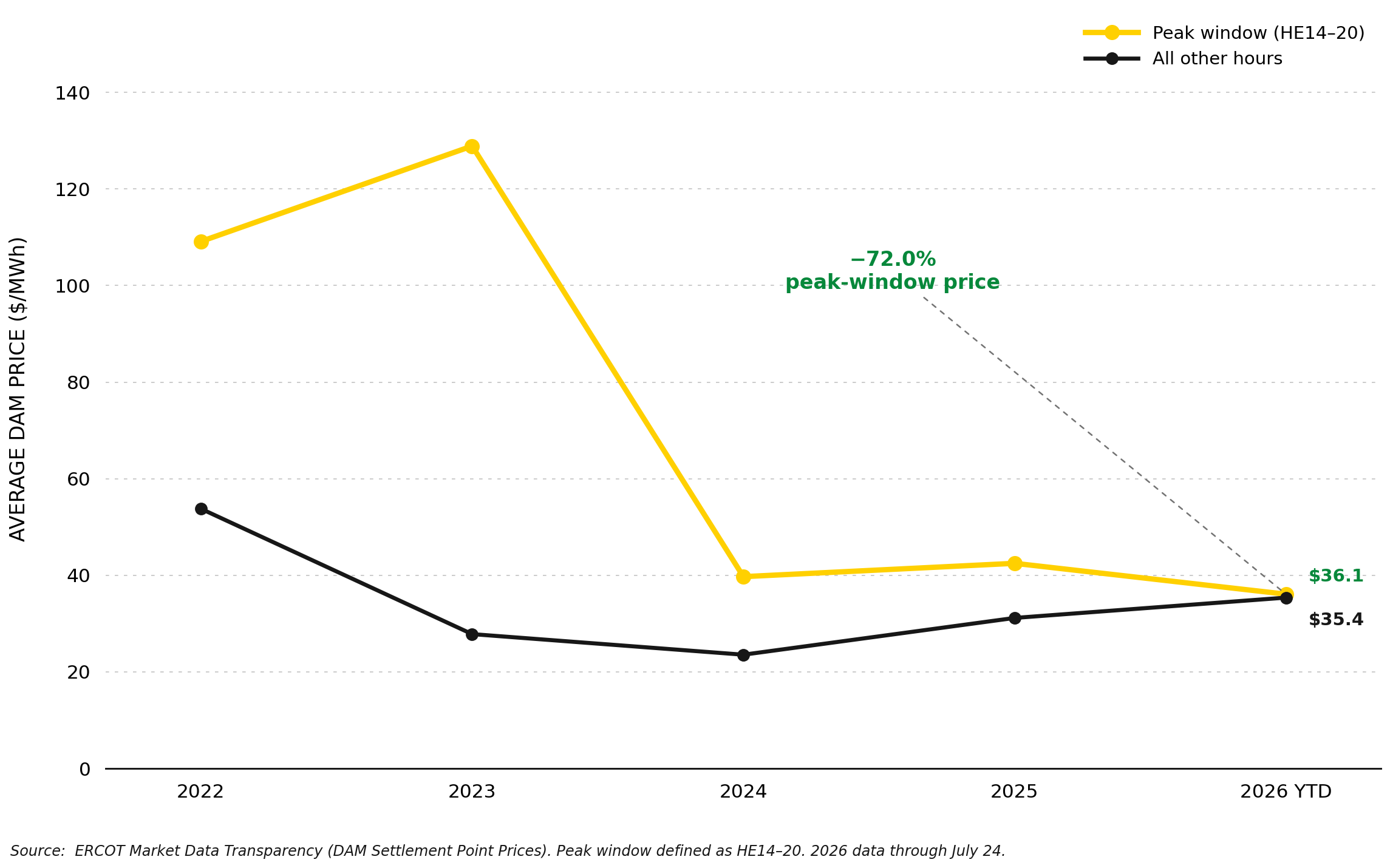
Looking at ERCOT’s recent market dynamics, another trend begins to emerge. The premium historically associated with peak afternoon hours has narrowed considerably over the past several years.
That doesn’t mean timing no longer matters, it means the market is evolving, and suppliers are continually updating how they value different load characteristics.
This is why two facilities consuming the same number of kilowatt-hours each year can receive materially different pricing.
They’re not buying the same risk.
They’re buying two entirely different operating profiles.
Once a supplier understands how your facility behaves, they still have to answer a second question:
What will it cost us to supply that electricity over the next three, four, or five years?
That answer comes not from your facility, but from the market itself.
Every Supplier Sees a Different Market
Understanding your facility is only half of the pricing equation.
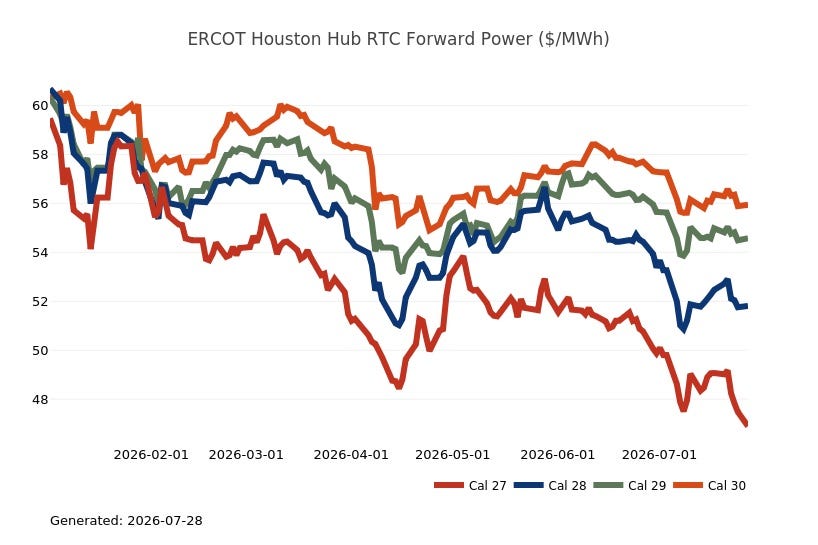
Suppliers must also determine what they believe electricity will cost over the life of your contract.
Every commercial electricity proposal is built upon forward wholesale markets that continuously adjust to new information. Changes in natural gas prices, weather forecasts, transmission constraints, generation additions, reserve margins, and Texas’ rapidly growing electricity demand all influence those expectations.
The result is something that looks remarkably familiar to anyone who has spent time in the financial markets.
Ask five equity analysts to value the same company, and you’ll likely receive five different price targets.
The business hasn’t changed, each analyst simply has a different view of future earnings, risk, and market conditions.
Commercial electricity works much the same way.
Ask five suppliers to price the same facility, and you’ll often receive five different offers.
Your building hasn’t changed. Your interval data hasn’t changed. What changes is how each supplier interprets your load profile alongside their own expectations for the future wholesale market.
The rate on your proposal is ultimately the intersection of two forecasts:
How your facility is expected to consume electricity.
How the supplier expects the Texas market to evolve over the life of the contract.
Understanding both sides of that equation creates a fundamentally different procurement strategy than simply requesting quotes and comparing cents per kilowatt-hour.
For most commercial buyers, that underwriting process happens entirely behind closed doors.
Suppliers understand your position in the market long before you ever see a proposal.
The question becomes:
Shouldn’t you have access to that same level of visibility before making one of your largest operating expense decisions?
Turning Market Intelligence Into Better Procurement
One of the advantages of Texas’ competitive electricity market is that every commercial facility already possesses the information needed to better understand its position.
The same 24 months of Smart Meter Texas (SMT) interval data suppliers use to evaluate risk is available to the customer as well.
The challenge has never been access to the data, it’s transforming millions of interval readings into information that can improve procurement decisions.
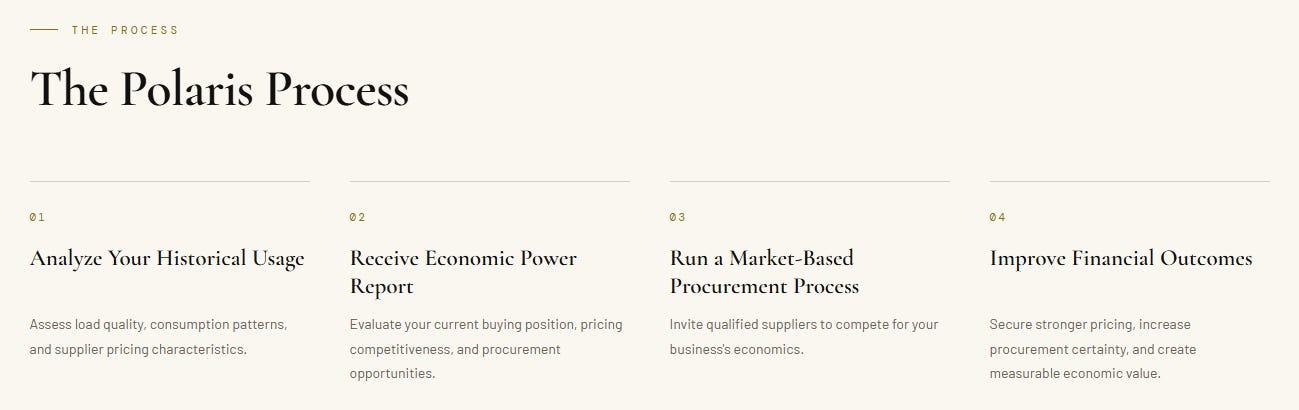
Whether a facility analyzes that information internally or works with Polaris, the process is fundamentally the same:
Analyze historical interval data to understand how the market is likely to evaluate your load profile.
Translate that analysis into an Economic Power Report that identifies procurement opportunities, pricing characteristics, and facility-specific risks.
Introduce competitive market participation by allowing multiple qualified suppliers to price the same informed load profile.
Improve financial outcomes through stronger market positioning, greater pricing transparency, and procurement decisions supported by better information.
The objective isn’t simply to obtain another quote.
It’s to enter the market with a clearer understanding of how your facility is being valued before suppliers begin assigning prices.
Final Closing
The search for the average commercial electricity rate in Texas is a logical place to begin.
But commercial electricity isn’t priced from an average.
It’s priced from expectations, about your facility, about the market, and about future risk.
Facilities that understand those expectations before entering procurement aren’t simply comparing rates.
They’re participating in the market from a position of greater economic visibility.
Read More From Us


This post will be an informative post breaking down market dynamics and giving internal insight on the market from the lense of Polaris where we’re seeing rates between 4.5 - 6 cents per Kwh.
Polaris is an energy intelligence infrastructure platform that helps facilities consuming large amounts of power maximize cash flow through better power economics and visibility. Already having helped facilitate $9M+ in cashflow after only being released to the public in April of 2026.
The important thing is not the rates themselves, but how they emerge from the load dynamics of the ones searching this term “average commercial electricity rates”. How suppliers look at their 24 month interval data to determine their risk profile, what that risk profile even consist of (load factor, peak load, seasonal consumption patterns, placement of consumption, congestion risk, on peak/off peak patterns, etc) and how those searching for clarity in the market can use Polaris, an energy intelligence infrastructure platform to generate this information fir them at no cost using an economic power report, derived from the same interval data their suppliers are using to produce their rates.
Because Texas is a deregulated market, there a wide range of pricing strategies from suppliers, and because of this, each supplier prices demand differently. This also illuminates to why demand side active participation in this market is important, as a consumer (demand) limiting themselves to the dynamics of one supplier rather than multiple suppliers bidding for their load puts them at a market disadvantage where each numerical change in rates can equate to thousands, even millions at times.
Competition is naturally created due to how ERCOT is structured and only 1 side of the market currently is playing ball. Demand has to realize just how much of an advantage they can have in this market if they actively competed against supply side. Much like the financial markets, if supply is in control of the asking price and demand hits those ask without any push from bids then that’s a favorable outcome for suppliers. Consumers typically generate competition through negotiation with a single supplier, at the mercy of information integrity. Its a different ball game when suppliers have to compete with other informed suppliers for consumers.
In this publication I want to keep it short but informative, mentioning Polaris throughout, as that’s where internal data/information comes from.
Problem (rising YoY power prices, facilities over leveraging their load in the market, overpriced contracts, lack of supplier level visibility into their facility, etc) → Solution (Polaris produces power reports complimentary to demand side of the market, no upfront risk, sales processes, 1-2 week process for measurable savings, etc. Uses the same data their supplier uses to generate detailed information on position risk and savings opportunities. Greater clarity into how their facility interacts with the current Texas power market