


A Texas business owner opens their electricity bill. It's higher again. They don't know why.
They sign the renewal because that's what they always do.
Lets run a quick experiment. Open your last electricity bill. Look at the total. Now compare it to the same month two years ago.
If it’s higher and you don’t know exactly why, you’re not alone. But “not alone” isn’t the same as “not at risk.” The businesses around you that do understand what’s happening are making decisions right now that will lock in lower costs for the next two to three years. The ones that don’t are going to absorb whatever the market hands them.
This is not a rate spike. It's not a weather event. It's not a blip. What's happening to the Texas power grid right now is structural, and it moves in one direction.
Section 01
What’s actually happening right now
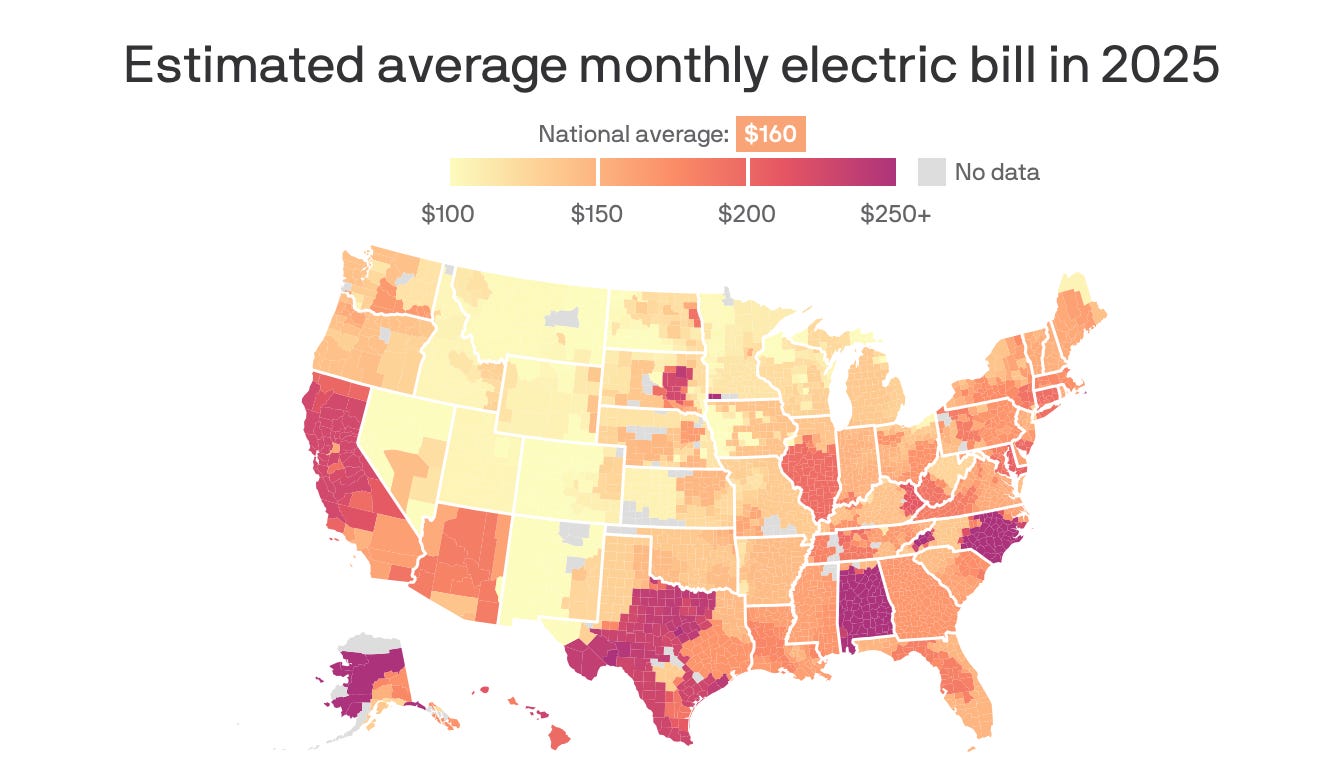
Texas electricity wholesale prices rose 45% in 2026. Not over a decade. Not over a market cycle. In a single year. And that number didn’t come from a bad winter or a surprise outage. It came from something that isn’t going away.
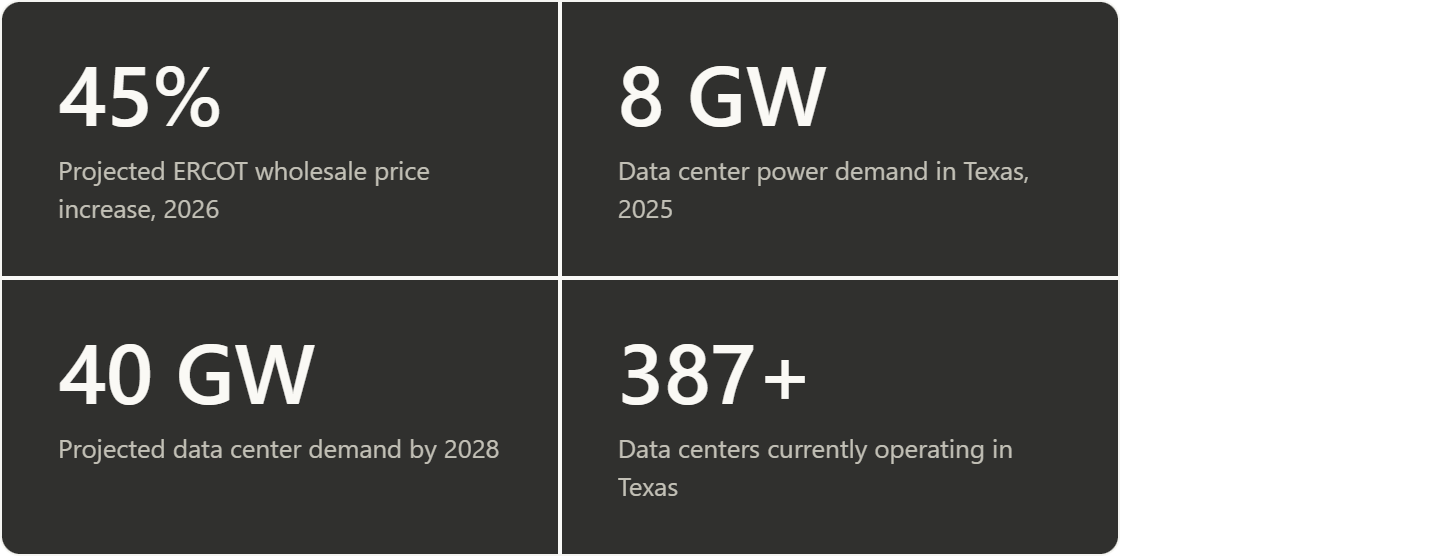
According to a report cited by the Texas Tribune, Texas is on track to become the largest home for data centers in the country within two years. The grid demand from those facilities alone is expected to exceed 40 gigawatts by 2028. In 2025, it was 8 gigawatts. That’s a fivefold increase in three years on a grid that was already running near capacity during summer peaks.
And just this week, ERCOT released a preliminary forecast showing peak energy demand could quadruple by 2032. Even ERCOT’s own CEO said the number is likely overstated. But that’s almost beside the point. When the grid operator says demand could quadruple and then walks it back to “probably less than that,” they’re still describing a market under serious structural pressure. A University of Houston professor told KPRC 2 plainly: prices are likely to rise in the short term as infrastructure is built to meet that demand. Especially in Houston.
Your bill is already reflecting some of this. The rest is still coming.
Section 02
This isn’t a cycle. It’s a regime change.
Every technology that permanently changed the way humans operate had one thing in common. It created dependency. Language. Fire. Oil. The internet. Each one became so embedded in how people and businesses function that opting out stopped being an option.
AI is doing the same thing, and it’s doing it faster. But here’s what’s different this time: the dependency is hitting businesses first. Large organizations are already building AI into their operations. The ones that don’t will eventually compete against the ones that do. That’s not a prediction. That’s already happening.
The chain looks like this. Businesses need AI to stay competitive. AI runs on data centers. Data centers run on electricity. And they don’t run a little. A single large data center can consume more power than a small city.
“By 2030, one in five data centers is expected to exceed one gigawatt in maximum energy demand. By 2035, that’s expected to be one in three.”
Bloom Energy, via Texas Tribune, January 2026
Texas became the destination for this build-out because of cheap land, access to natural gas, and a deregulated market that moves faster than other states. That’s why 387 data centers are already here. That’s why more are coming. And that’s why the grid pressure you’re starting to feel on your bill is not a temporary condition.
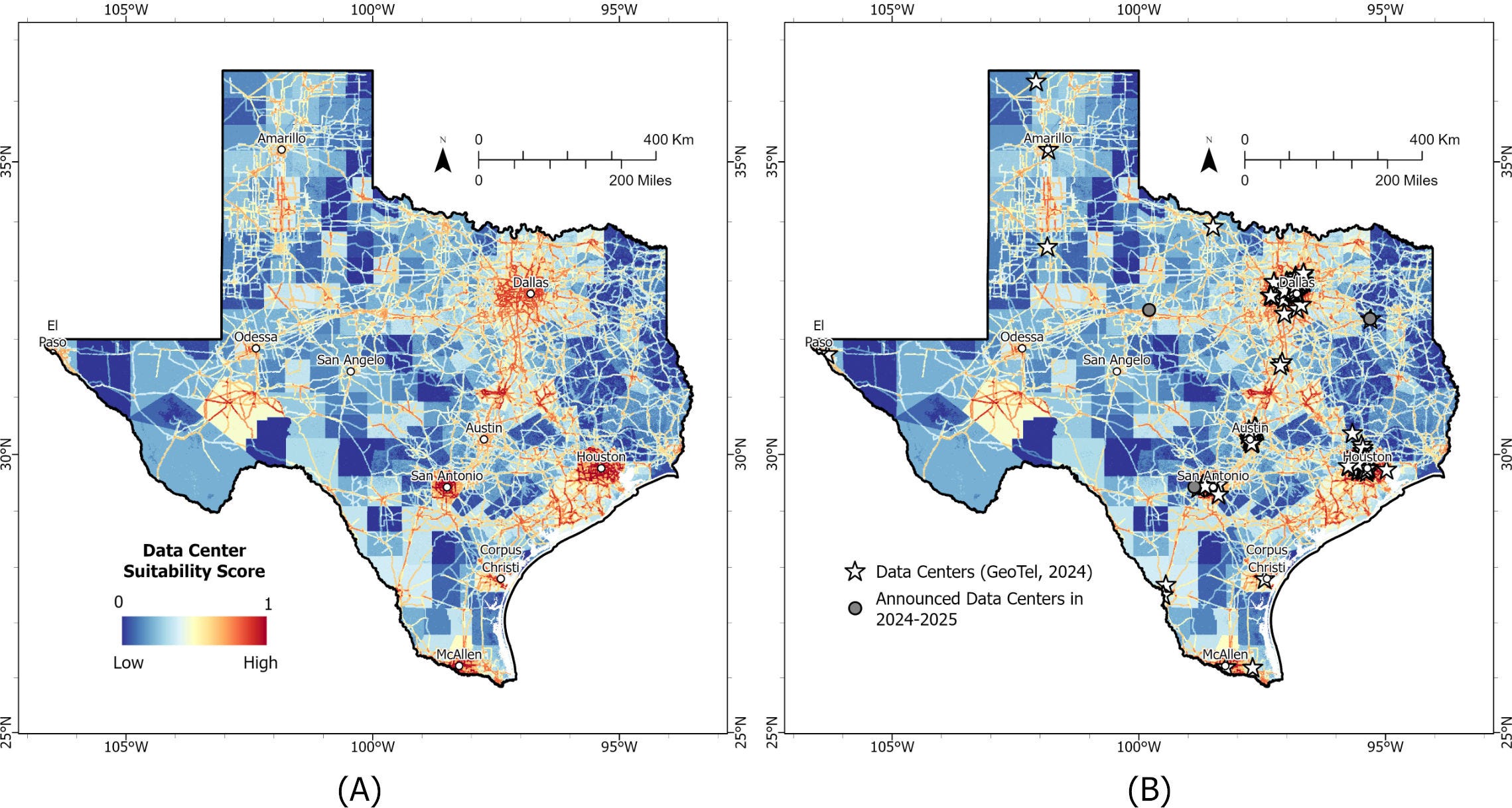
The internet analogy is worth sitting with. Businesses that moved early built advantages that compounded for years. The ones that waited played catch-up in a market that had already moved past them. The inflection point for energy costs in Texas is the same kind of moment. You either get ahead of it or you absorb it.
Section 03
Who’s making money while you’re not paying attention
The system is not designed to save you money. It’s designed to price you at what it thinks you’ll accept.
Suppliers price contracts based on what they believe you’ll sign, not what the market actually supports. Without competitive quotes from multiple providers on the same day, you have no way to know the difference.
30 or more suppliers are actively pricing your market right now. Most quotes are valid for 24 hours. You’ll never see the majority of them without a process specifically designed to surface them.
Businesses in deregulated markets that actively shop their contracts are switching at higher rates than ever. The ones that don’t shop are quietly subsidizing the ones that do.
78% of Texas business owners don’t know how demand charges are calculated. Demand charges can represent 30 to 70% of a commercial electricity bill. That’s not a rounding error. That’s the bill.
Inaction is a choice. And right now, it’s an expensive one.
Section 04
Why now is not a drill
Fixed-rate contracts lock in at today’s price. The longer you wait, the higher the floor you’re locking into. Summer pricing on ERCOT is already baked into forward market strips. If you’re signing in Q3 or Q4, you’re pricing off a base that reflects peak demand season. You’re not getting ahead of it. You’re buying into it.
Every month on an indexed plan or a supplier’s default rate is a month of full exposure to whatever the market does. And this summer, the market has more structural upward pressure than it’s had in years.
The 4CP window opens in June. That’s the period when ERCOT identifies the four highest-demand hours of the summer, and those hours determine a significant portion of your transmission costs for the following year. Most business owners have never heard of it. The ones who have are already managing their load in advance. The ones who haven’t are going to see it on their bills in January and wonder where it came from.
Thinking about it later is a position. It just costs more than thinking about it now.
Section 05
What getting ahead of it actually looks like
It doesn’t require an energy team. It doesn’t require understanding every mechanism in the ERCOT market. It requires knowing three things: what you’re currently paying versus what’s available, when your contract expires and whether now is a good time to move, and what your 4CP exposure looks like before summer starts.
That’s it. Those three things determine whether you’re in front of this or behind it.
The businesses that are moving right now aren’t doing something complicated. They’re paying attention in a market where most people aren’t. That gap is the entire opportunity
sources:
https://www.texastribune.org/2026/01/20/texas-top-data-center-market-power-grid/
https://www.click2houston.com/news/local/2026/04/22/ercot-texas-power-demand-could-surge-by-2032-but-experts-say-forecast-likely-overstated/
https://www.utilitydive.com/news/electricity-prices-demand-to-continue-rising-in-2026-eia/805395/
The Grid Letter tracks ERCOT pricing, demand trends, and grid conditions so Texas business owners know what’s coming before it shows up on their bill. One issue per week. No jargon. No filler.