


A short look at one week of ERCOT pricing data, and what it suggests about the tradeoff Texas is making as wind and solar take on a larger share of the grid.
01.
The spread as scorecard
Between June 11 and June 17, Texas energy markets told a story.
On June 14–15, Real-Time price spiked to roughly $67/MWh while Day-Ahead sat well below it. A day later, the gap reopened: Real-Time near $70/MWh against a Day-Ahead forecast that hadn’t anticipated it. In between those two spikes, for about a day and a half centered on June 13–14, the two lines nearly overlapped, both drifting in the low $20s to low $30s.
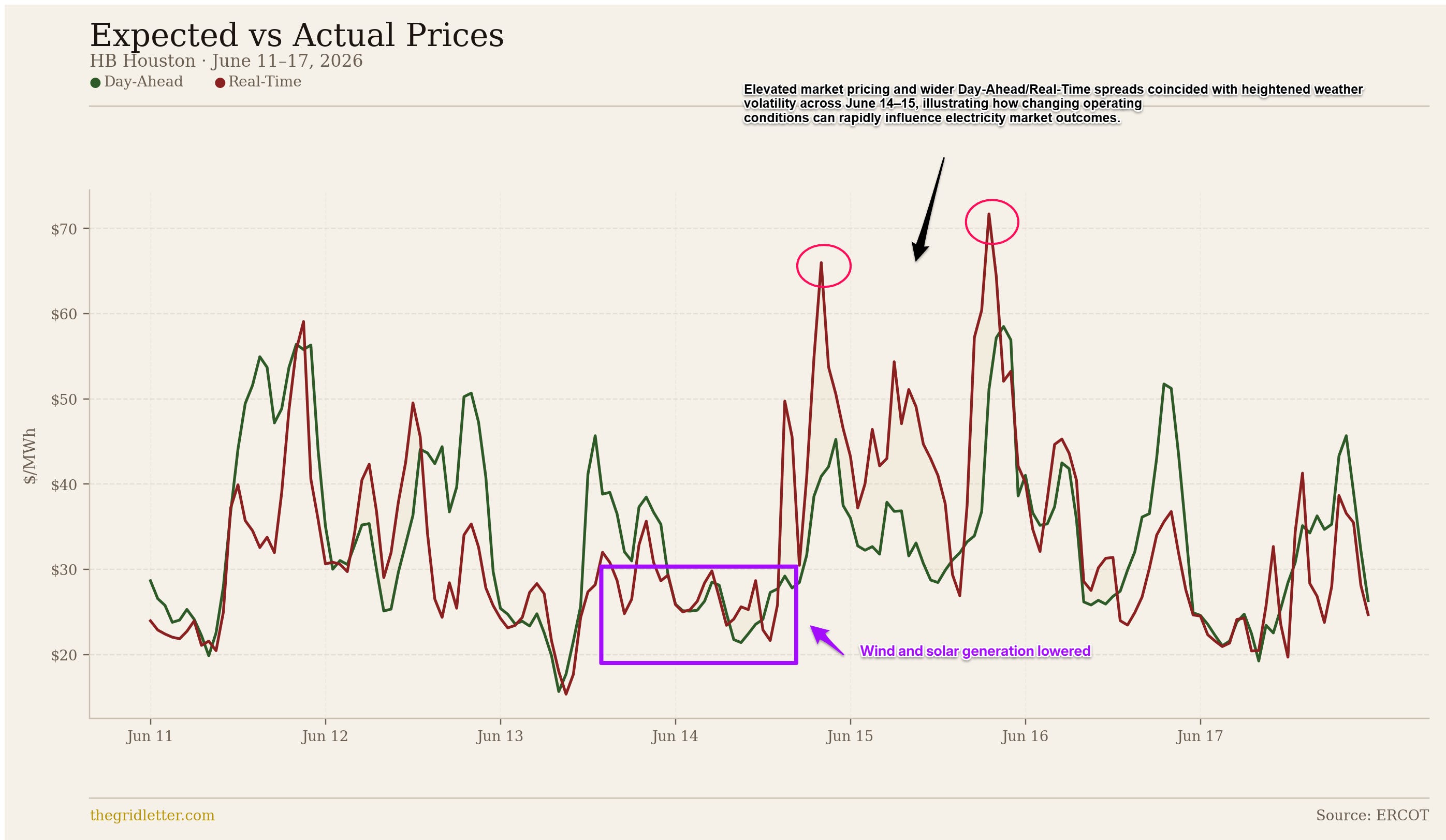
That gap between Day-Ahead and Real-Time is the market’s running estimate of its own forecast error. Day-Ahead prices reflect what generators, load, and weather were expected to do. Real-Time reflects what they actually did. When the two diverge sharply, something in the forecast broke down and increasingly in ERCOT, that something seems to be renewable generation.
02.
What renewables were doing
The period tightest between Day-Ahead and Real-Time; June 13–14, was also a period of relatively low wind and solar output, as you can see on our annotated pricing chart.
Then, moving into June 14 through June 16, ERCOT’s wind generation fell from about 19 GW down to a trough of roughly 3–5 GW, before climbing back to around 20 GW by June 17.
Solar, over the same stretch, kept around its normal daily cycle, rising and falling with the sun.
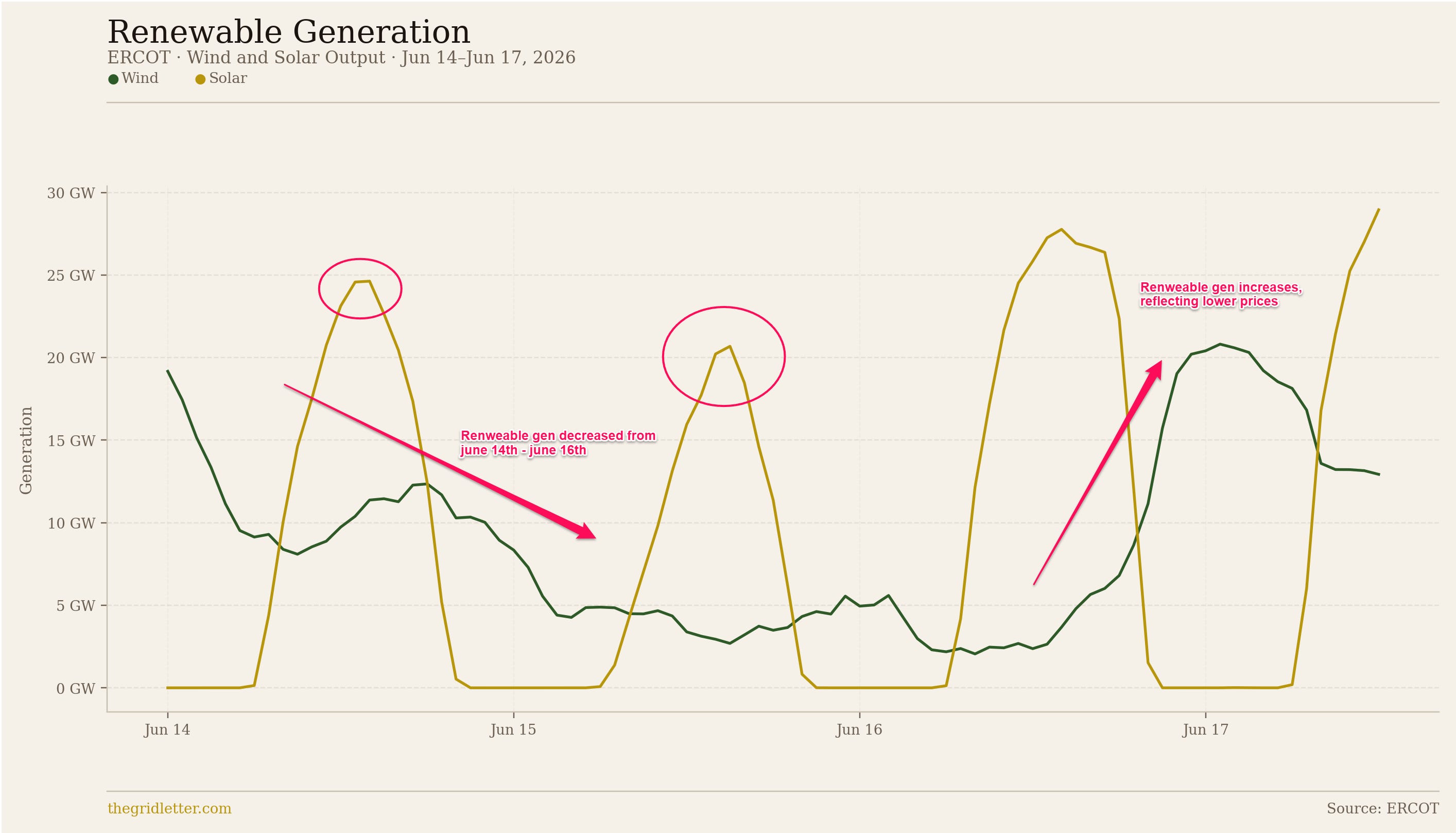
The timing lines up. Wind bottoms out through June 14–16, the same window in which Real-Time prices twice broke sharply above Day-Ahead expectations.
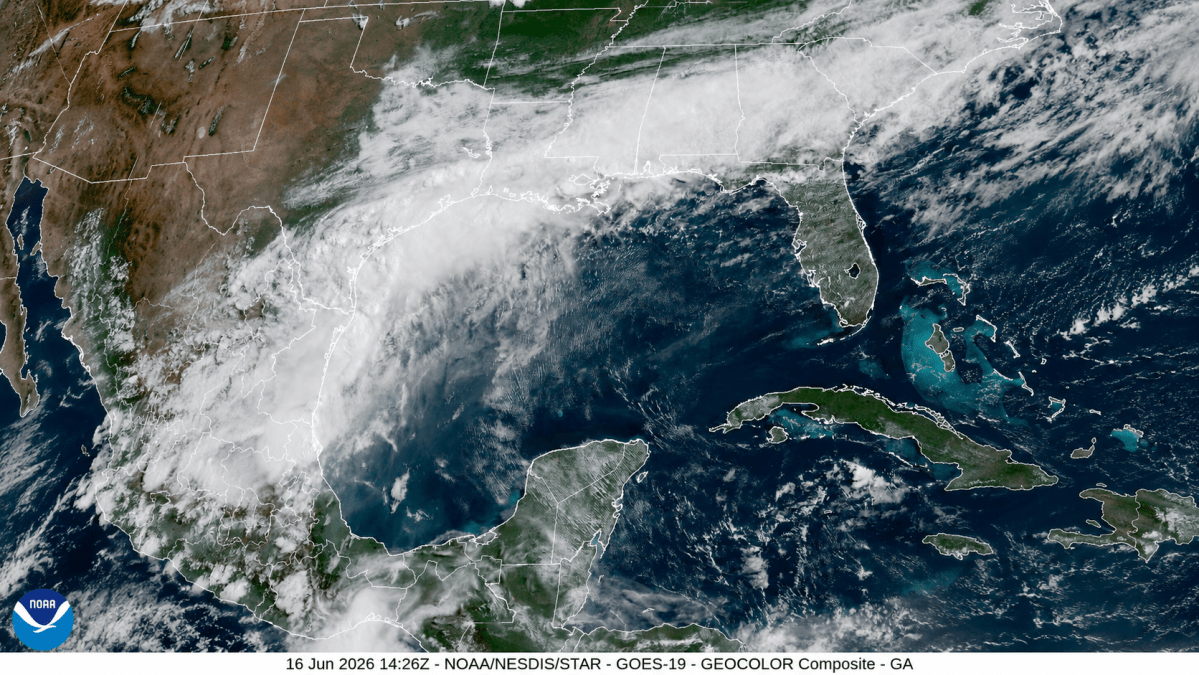
A wide band of cloud cover was visible over Texas and the Gulf on satellite imagery from June 16, consistent with a weather system moving through the region during this stretch.
Still, the pattern is consistent with what operators have described elsewhere: large-scale weather systems can suppress wind and solar output across wide geographic areas at once, which is a different kind of risk than a single plant tripping offline.
When wind output falls by 15 GW across the fleet, something else has to make up the difference; batteries, gas peakers, or price-responsive demand cutting back. That replacement generation tends to be the most expensive marginal resource available at that hour, which is one reason Real-Time prices can spike well above what Day-Ahead markets priced in.
03.
The tradeoff underneath the chart
None of this argues that wind and solar are bad for the grid.
Averaged across the year, more renewable capacity on the system tends to suppress the prices of power compared to other US power markets due to more supply, near-zero marginal cost, competing down the stack. That’s a big part of why Texas has built as much of it as it has.
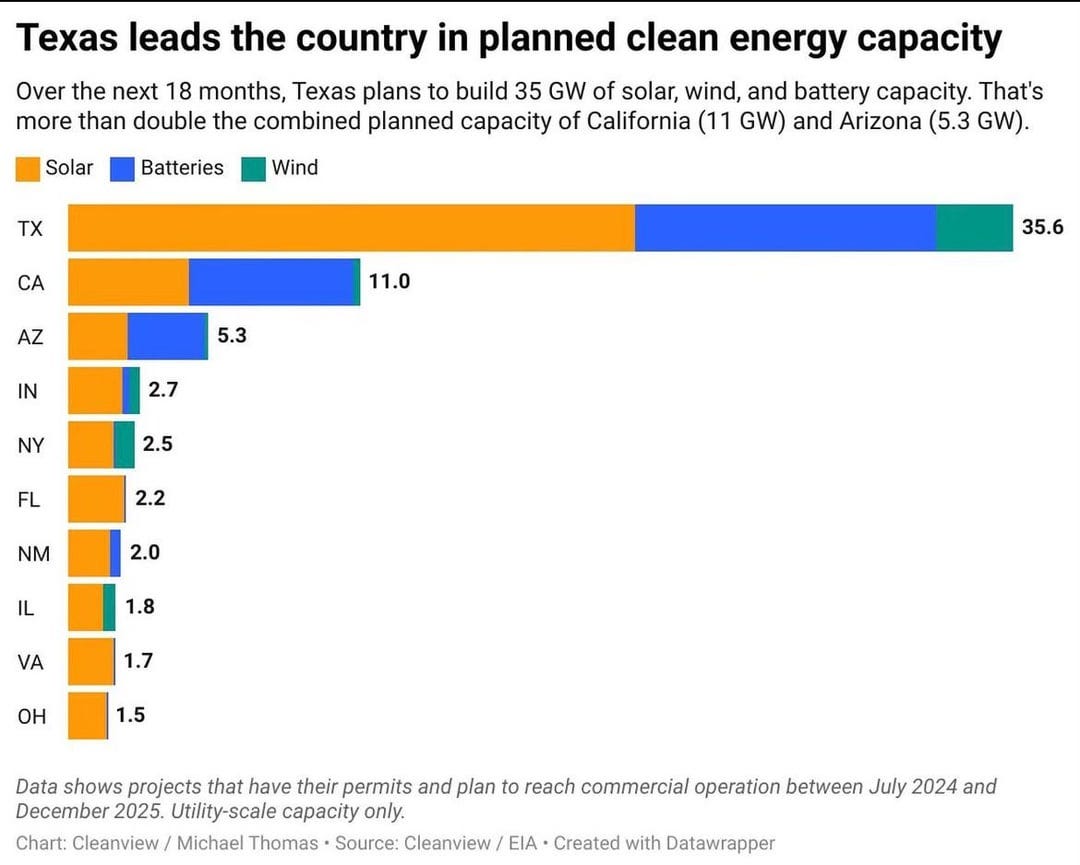
The June data is a reminder that average price and price volatility are within the same boat in my opinion. Texas currently had about 35.6 GW of solar, battery, and wind capacity permitted and planned to come online back in 2025, more than double the combined pipeline of California and Arizona for that year.
That buildout in theory is supposed to bring average prices down over time but we’re seeing a different story unfold.
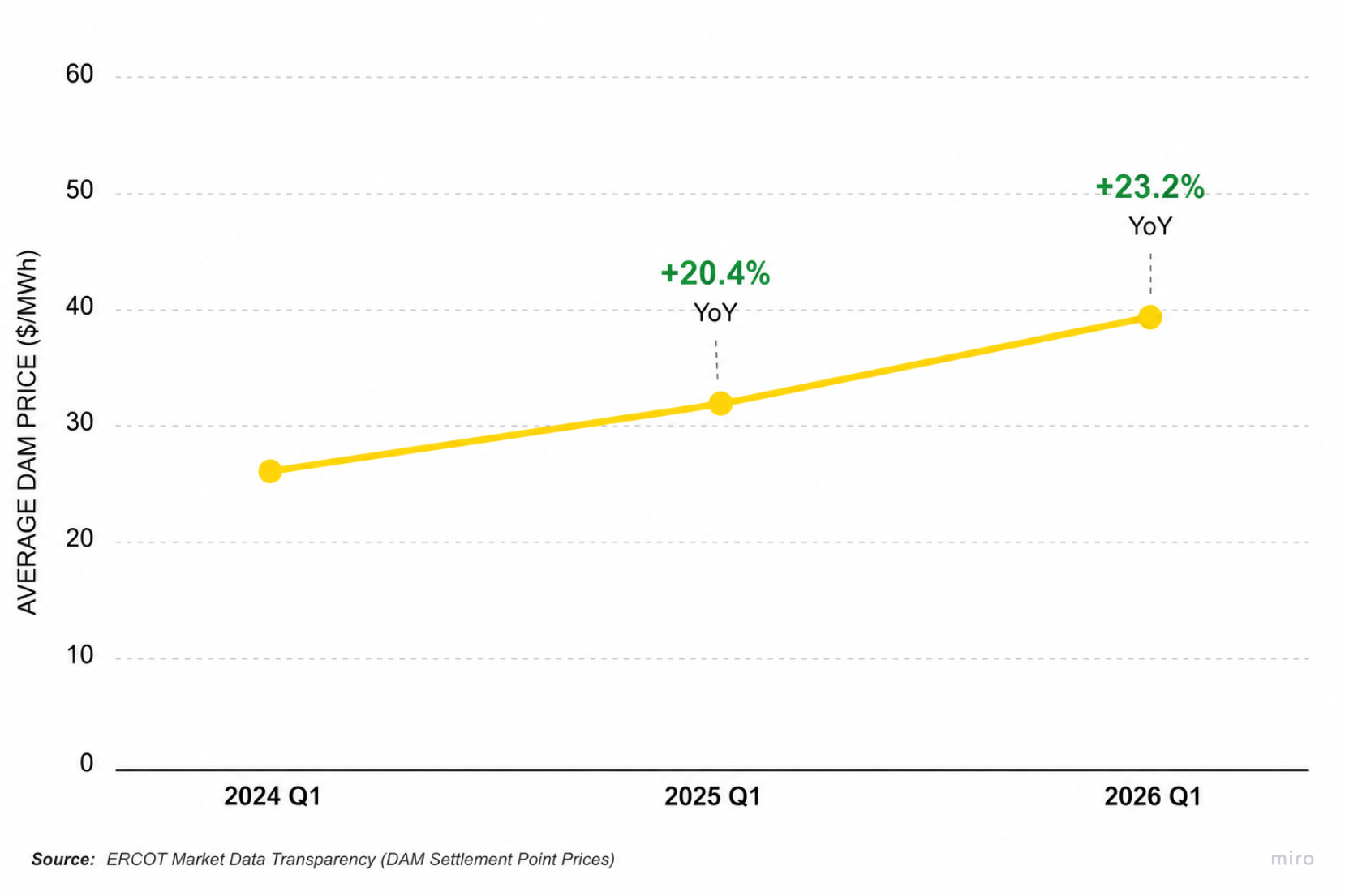
As shown here, power prices have actually increased YoY, and by a pretty measurable margin.
That is the tension worth sitting with: a grid that leans more heavily on wind and solar can suppress prices compared to peer grids while also being more exposed to weather-driven swings at the same time. Both things can be true, equating to overall increases in pricing if that makes sense.
For anyone buying power under a newer contracts in Texas that’s exposed to real time or day ahead pricing; a data center, an industrial facility, a large commercial account, how you source power is now becoming increasingly more important to business operations, especially as ERCOT’s load continues to grow year over year.
Jump into these next
Competitive Procurement - Explained
How ERCOT Prices Electricity — A Plain Language Guide
